
Discover why proximity with verified reviews together protect you when choosing local businesses — and how Trusti makes the combo effortless. Read more
Every day, millions of people open a map app, search for something like “best plumber near me” or “top-rated daycare close by,” and make a quick decision based on whatever floats to the top. It feels efficient. It feels safe. But that search result is combining two very different kinds of trust signals — proximity and reputation — without actually verifying either one. And that gap between apparent safety and real safety is exactly where bad experiences happen.
According to the BrightLocal Local Consumer Review Survey 2025, only 42% of consumers today say they trust online reviews as much as a personal recommendation from a friend or family member — down from 79% in 2020. That collapse in trust is not an accident. It is what happens when proximity and reviews are treated as reliable on their own, before anyone has checked whether either signal is actually what it claims to be.
Why isn’t it enough to just pick the highest-rated business near me?
A high star rating alone can reflect gamed or purchased reviews, and a nearby address does not guarantee genuine neighborhood ties or reliable service. The safest choice comes when a business is both verifiably local — real address, real staff, real community presence — and supported by reviews that trace back to confirmed real transactions. Stacking those two signals together dramatically reduces the chance of a bad outcome.
The promise of local search is simple: find something nearby, read what other people thought, make a decision. It should work. And yet most people have at least one story where it did not. The mechanic with 200 five-star reviews turned out to have a parking lot address two towns over and a customer-service style that matched none of those glowing write-ups.
The highly rated restaurant that showed up as “0.3 miles away” had clearly relocated, because the neighborhood felt nothing like the cozy spot described in the reviews. The contractor you found through a major platform had a local phone number that routed to a national call center, and the crew who showed up had never actually worked in your city before.
These experiences are not rare flukes. They are structural problems with how most platforms surface local businesses. The map pin says one thing, the star rating says another, and neither has been independently verified to mean what it appears to mean.
Proximity data is often stale, spoofed, or technically true in ways that obscure the real picture. Review data is frequently manipulated, aggregated across distant locations, or padded with incentivized write-ups that have nothing to do with the actual service quality your neighbors experienced.
When you rely on either signal in isolation, you are essentially trusting an assertion without any evidence behind it. That is why the combination matters so much — and why understanding what each signal truly represents is the first step toward making smarter decisions.
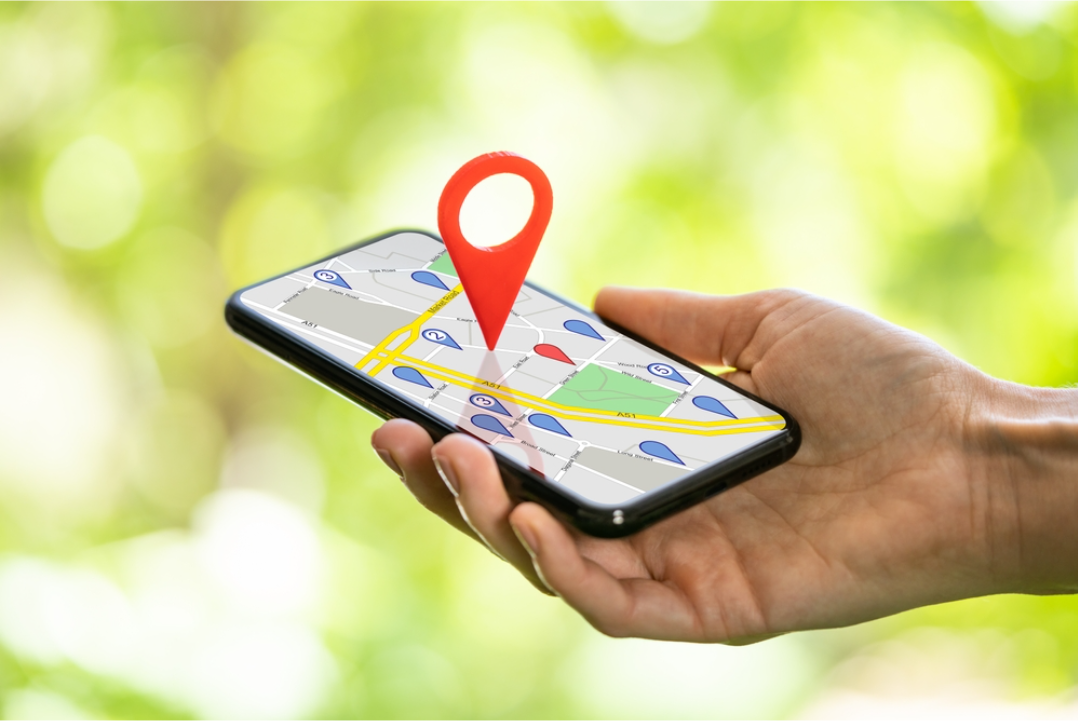
When most platforms display a business as “nearby,” they are showing you a coordinate — typically the address registered in a business directory or self-reported through a profile setup form. That is a starting point, not a verification. A real sense of proximity goes several layers deeper, and those layers are what actually predict whether a business will serve you reliably.
Genuine local proximity means the business has a physical presence that real people in your community can confirm. It means the owner or manager lives and operates in the area, not that a franchise license holder dropped a pin on a map and hired remote contractors to fulfill jobs.
It means the staff knows your neighborhood’s quirks — the basement that always floods in spring, the type of tile common in houses built before 1970, the school-zone traffic patterns that affect delivery windows. It means the business has a track record in your ZIP code, not just an address in your ZIP code.
You can start to distinguish real local presence from a surface-level address by asking a few questions when you research a business.
These are the signs of a business that is genuinely embedded in your community, not just registered at an address within a certain radius.
A map pin tells you a business that claims to be near you. Real proximity tells you that the business is known by, accountable to, and sustained by the same community you live in. Those are very different things, and conflating them is one of the most common ways consumers end up with a service provider who has no real investment in doing right by them.
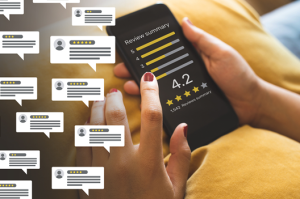
The word “verified” gets used loosely in the review world, which has made it nearly meaningless on many platforms. A checkmark next to a review does not always mean someone confirmed the reviewer actually purchased the service. Sometimes it just means the account used to post the review has an email address attached to it. That is a very low bar, and sophisticated review manipulators cleared it years ago.
Genuinely verified reviews have a chain of evidence behind them. The reviewer can be traced to a real transaction — a booking, a payment record, a service confirmation — that independently establishes they actually used the business. The review was written close to the time of that transaction, not bulk-uploaded weeks later. The reviewer’s profile shows a consistent history of reviewing multiple businesses, not a single glowing review posted right after account creation. The review includes specific operational details — the name of the technician, the nature of the problem that was fixed, the timeline of the job — that an outsider could not fabricate without actually having been there.
Time-stamp patterns matter enormously here. A business that accumulates fifty reviews in three days, all rated five stars, all written in similarly enthusiastic generic language, is exhibiting the exact pattern the FTC’s 2024 rule on fake reviews was designed to address.
Legitimate businesses build review profiles slowly and unevenly, with a natural spread of four and five stars, occasional honest three-star notes, and a handful of two-star reviews that the business responded to professionally. That organic, imperfect pattern is paradoxically the most trustworthy one. When everything is uniformly positive and the timing is compressed, that uniformity itself is evidence of manipulation.
Photos attached to reviews add another layer of authenticity. A customer who includes a photo of the haircut they received, the repaired pipe, or the finished kitchen tile is providing visual evidence that is genuinely hard to fake at scale. Similarly, reviews that name staff members by name, describe specific products used, or reference the physical layout of a location are anchored in real experience in a way that generic praise simply cannot be. These are the signals that separate reviews worth trusting from reviews worth ignoring.
Consider the experience of finding a plumber in an emergency. Your basement is taking on water on a Sunday afternoon. You search quickly, find three plumbers with strong ratings, and book the first one who picks up. He arrives two hours late, quotes you double what the job should cost, and leaves without fully resolving the issue.
When you dig into his profile afterward, you notice that his address is thirty miles away, his reviews are clustered in groups of ten posted within a single day, and none of the reviews mention your city by name. He is technically “local” by a generous radius setting and technically “highly rated” by a review count you did not examine closely. If you had spent five minutes cross-checking proximity and review verification before calling, you likely would have chosen differently.
Now imagine a different approach. Before calling anyone, you quickly check whether the plumber’s address matches a real business location in your neighborhood, whether any reviews mention streets or landmarks you recognize, and whether the review timestamps are spread naturally over months and years.
You find one plumber with fewer total reviews but a consistent track record in your ZIP code, reviews written by accounts with local review histories, and responses from the owner that reference specific jobs and customer names. That plumber may not rank first in a generic search, but he is the one who knows your neighborhood’s pipe infrastructure, has a real reputation to protect in the community, and has reviews that hold up to scrutiny. That is the combination that protects you.
The same logic applies when you are searching for a daycare. The stakes there are as high as they get. A daycare facility might have a hundred glowing reviews on a national platform, but if those reviews come from accounts with no other review history, were all posted within the same month, and do not reference any staff by name or describe specific daily routines, they should not move the needle for you.
What should move the needle is a daycare whose staff members are known by parents in your neighborhood, whose reviews mention specific caregivers by name, and whose physical address you can confirm as a real licensed facility at that location. Layering neighborhood embeddedness onto review authenticity is not paranoia — it is due diligence.
Finding a mechanic follows the same pattern. A shop might rank highly in regional searches based on accumulated reviews from customers across a broad geographic area, most of whom drove a significant distance specifically because they saw those ratings. That tells you something about volume but almost nothing about whether this mechanic serves the people in your specific neighborhood consistently and fairly.
The mechanic worth trusting is the one whose shop your neighbors actually use, whose reviews describe specific makes and models common in your area, and whose response to a critical review demonstrates accountability rather than defensiveness. When you stack real local presence with transparent, verifiable reviews, you are choosing from a much shorter, much safer list.
You do not need to spend an hour on research to apply this framework. A focused five-minute check before committing to a local business can screen out most of the risk.
Start with the address. Search the address on a map tool and look at the street view. Does the location actually look like a business that matches the service being offered? Is there a physical sign, a storefront, or an identifiable workspace? If a plumbing company’s address resolves to an apartment building or an empty lot, that is a disqualifying signal regardless of how many stars the profile carries.
Next, look at the review timestamps. Scroll past the most recent reviews and look for the distribution across time. A healthy review profile shows activity spread over at least a year, with visible gaps that match normal business rhythms. If the reviews spike dramatically over a short window, look for what changed — a sudden influx of incentivized reviews or bulk-purchased ratings often follows a dip in organic reputation.
Then check reviewer profiles for locality signals. Click through to two or three reviewer accounts and see whether those accounts have reviewed other businesses in your area. Reviewers with local histories are reviewing the coffee shop on your main street, the hardware store in your neighborhood, and the gym two blocks over. A cluster of reviewers who have only ever reviewed the single business you are considering — and who have names, photos, and profile details that feel generic — is a meaningful warning sign.
Finally, look for specificity in the review text itself. Reviews that describe what was actually done, who did it, and what the outcome looked like in specific terms are almost always genuine. Reviews that are enthusiastic but general — “Amazing service, highly recommended!” with nothing more — provide almost no real signal. A business with ten specific, detailed reviews is often a safer choice than one with a hundred generic five-star posts.
Trusti was built on the understanding that consumers should not have to run this checklist manually every time they search for a local business. The platform’s architecture reflects that insight by treating proximity and verification not as separate features but as a unified trust signal that every business must pass before appearing in results.
On the proximity side, Trusti confirms that a business has a real, verified physical presence in the community it claims to serve. This goes beyond a registered address — it means checking that the business is actually operating at that location, that the people running it are embedded in the local area, and that the business has genuine community accountability. The Proximity pillar in Trusti’s trust framework is specifically designed to filter out businesses that game location data to appear local when they are not.
On the verification side, Trusti’s review system is built around confirmed transactions rather than open self-reporting. Reviews are tied to actual service interactions, reviewer identities are validated against real accounts with local history, and the platform’s algorithms flag patterns consistent with review manipulation. The timestamps, the specificity, the reviewer profiles — all of it is evaluated before a review contributes to a business’s standing on the platform.
What this means practically is that when you search for a mechanic, a daycare, a plumber, or any other local service on Trusti, you are looking at businesses that have already passed both filters. You are not being asked to manually cross-check whether the address is real or whether the reviews are genuine — that work has been done before the result ever reaches you. The businesses surfaced by Trusti are there because they are genuinely local and genuinely reputable, not because they spent money on a search ranking or padded their review count. That combination is what the platform’s Proximity and Verification pillars are designed to deliver in every single search.
The fastest check is a street-view map search of the address. A genuine business will typically have a physical presence — a sign, a storefront, an identifiable workspace — visible at that location. You can also search the business name alongside the city or neighborhood to see if it appears in local news, community group mentions, or neighborhood directories that an out-of-area operator would be unlikely to appear in. If the address resolves to a residential building, a vacant lot, or a mail-forwarding service, treat that as a significant red flag regardless of how strong the business’s review profile looks.
A verified review is one that can be traced to a confirmed real transaction between the reviewer and the business. The strongest indicators of a genuine review include a timestamp close to the service date, specific operational details that only a real customer would know, a reviewer profile with a consistent history of reviewing other local businesses, and — where available — a platform confirmation that the reviewer actually booked or paid for the service. Reviews from accounts with no other review history, reviews posted in compressed time clusters, and reviews that use identical or very similar phrasing are all signals worth treating skeptically.
Genuine locality predicts accountability in ways that a high star rating alone cannot. A business that is deeply embedded in your neighborhood depends on word-of-mouth from your community for its livelihood, which creates a real incentive to deliver consistent results. An out-of-area business with strong aggregate ratings may have earned those ratings in a different market with different conditions, and it has less to lose from a bad outcome in your specific neighborhood. Local accountability is a structural protection, not just a convenience.
Yes, absolutely. Review count is one of the least reliable predictors of actual service quality, particularly when the reviews have not been independently verified. A business can accumulate hundreds of reviews through incentivization programs, bulk purchasing, or coordinated campaigns by insiders — all practices now explicitly prohibited under the FTC’s 2024 consumer review rule, but still common on platforms that do not actively enforce against them. What matters is not how many reviews a business has, but whether those reviews reflect genuine experiences from real customers with verifiable local histories.
Trusti’s platform is structured around its seven TRUST Pillars — Proximity, Reciprocity, Verification, Consistency, Impact, Transparency, and Responsiveness — each of which functions as an independent layer of accountability rather than a single score that can be inflated. The Proximity pillar verifies actual local operation, not just a registered address. The Verification pillar confirms that reviews are tied to real transactions and real accounts with authentic histories. Because both signals must be satisfied independently and continuously, gaming one does not inflate the other, and businesses must maintain genuine performance across both dimensions to remain visible on the platform.
You’ve participated in plenty of marketplaces designed to extract value from you — platforms that monetize your attention, your data, your reviews, and your social graph while returning nothing to the community those things represent. Trusti is one of the few designed so that what you contribute compounds for the community you live in.
Every review you write is a deposit into a discovery system that your neighbor will draw on the next time they need what you already found. Every business you follow strengthens the signal that helps a small contractor’s best work finally get visible. Every referral you make raises the quality of the recommendations everyone in the network receives. Every community you engage with adds context that makes the platform more useful for the next person who arrives in your neighborhood without knowing anyone.
The flywheel doesn’t run on a clever algorithm. It runs on you. It runs on real people in real places deciding to contribute real information instead of consuming in silence. Each of those decisions is small on its own. Together, they constitute a civic infrastructure your neighbors increasingly cannot find anywhere else — a marketplace that gets better over time, that protects the people you care about, that rewards the local businesses that actually earn trust, and that gives the next newcomer the benefit of every honest voice that came before them.
You’ve done the hard part of the Round 2 journey. You’ve learned how to write reviews that actually help, how to protect people you care about through your activity, how to use the referral loop to build a stronger network, and how to participate in communities that reflect your real life. What this post asks you to hold onto is the bigger picture: your individual actions aren’t isolated. They’re part of a compound effect that builds something worth building. A marketplace where your neighbors can trust what they find, where good local businesses get seen, and where your community’s collective knowledge is finally worth something to the people who need it most.
That is what your Trusti activity is doing. Every review, every follow, every referral, every conversation in a community is a deposit into a discovery system that pays everyone back — including you.
You deserve to hire people you can actually trust — mechanics who know your neighborhood, daycares with a verified track record in your community, contractors whose reputations are built on real jobs and real reviews. That combination of genuine proximity and honest verification is not something you should have to chase manually across half a dozen platforms and review sites. It is what Trusti was built to deliver.
Visit Trusti to explore businesses that have already passed both filters, and discover what it feels like to search with real confidence rather than guesswork.
Read related Trusti stories, tips, and insights to help you make better community-based decisions.

Get the latest strategies, tips, and expert advice delivered directly to your inbox.
By signing up, you agree to our Terms and Conditions.
Join your community and help make the world a more trusted place—one review at a time.

Trusti Chief Marketing Officer
Bill Merrow is the Chief Marketing Officer at Trusti, where he writes about how local businesses grow through trusted community recommendations instead of anonymous reviews and paid ads.
A fractional CMO for more than 100 firms worldwide, Bill has led marketing and sales transformations at Cigna Healthcare, American Express, and General Electric — including building a 40,000+ person sales force and an annuity launch that drove $500 million in sales in 18 months.
His work centers on community-led growth, answer engine and SEO visibility, direct-response copywriting, and the referral, recognition, and lifecycle systems that turn happy customers into a business’s most effective sales force.
Bill believes the shortest path to a new customer is still a neighbor’s recommendation — and that marketing’s job is to make that endorsement easier to earn, easier to share, and impossible to ignore.


© 2026 Trusti | All rights reserved