

There is a version of you that walks into a restaurant, hires a contractor, or signs up for a service and thinks, “I should have seen this coming.” The reviews were there. The information was there. You just didn’t know how to read it. That changes today. Once you understand how to use review history as a predictive tool, you stop reacting to experiences and start anticipating them — and the difference is significant.

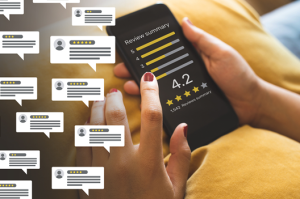
Most people treat online reviews the way they treat a weather app: they glance at the number, make a quick judgment, and move on. But a star rating is a snapshot. It tells you nothing about trajectory, stability, or what the business was like six months ago versus last week. Review history is a different kind of intelligence. It’s the full film, not a still frame. And when you know how to watch it, you can read the story a business has been writing for years — and decide whether that story ends well for you.

According to a June 2025 University of South Florida Muma College of Business research analysis on fake online reviews, real-world data from a variety of online platforms shows that negative reviews are more likely to be fake than positive ones. The study found that consumers tend to trust negative reviews at especially high rates — a phenomenon researchers attribute to “truth bias,” the tendency to assume information is truthful unless there’s strong evidence otherwise. 

What this means for you is that a quick star-rating check is not just incomplete — it can actively mislead you. The answer isn’t to distrust all reviews. The answer is to read them more intelligently, and that means reading them over time.

The Basic Insight Most People Miss

A business’s track record across months and years tells you something that its current rating fundamentally cannot: what it’s like to be its customer under normal operating conditions, repeatedly, over time. Any business can have a good week. Any business can respond to a crisis with extra effort and temporarily boost its scores. What you want to know is what it does when the cameras aren’t on — when it’s a random Tuesday and your job is just another job on the schedule.

When you look at review history with that question in mind, patterns emerge quickly. Certain words come up again and again. “Always on time.” “Explained everything.” “Felt like they actually cared.” When the same descriptors appear across dozens of reviews spanning multiple years, that’s not coincidence. That’s culture. That’s how this business operates at its baseline, and it’s a very strong predictor of how they’ll operate for you.

The reverse is also true. A business whose reviews spike wildly — glowing one month, terrible the next — is telling you something important. You might get the good version. You might get the bad version. The inconsistency itself is the data point, and it should give you pause before you commit.

Stability vs. Volatility: What the Pattern Shape Tells You

Think of a business’s review history as a graph. A flat, steady line of solid reviews across a long period is the shape you’re looking for. It means the business has figured out how to deliver a consistent experience regardless of who’s working that day, what season it is, or how busy they are. That consistency is hard-earned and worth paying attention to.

A volatile graph — sharp peaks and valleys, clusters of glowing praise followed by stretches of complaints — tells a different story. It might mean the business is heavily owner-dependent, delivering excellence when the owner is present and coasting when they’re not. It might mean high staff turnover is creating wildly variable customer experiences. It might mean the business went through a rough patch, addressed it, and recovered. The shape alone doesn’t give you the whole story, but it tells you what questions to ask and where to look more carefully.

Consider a family choosing an HVAC company for a major installation. They found a provider with a long history of strong reviews, but there was a noticeable dip in 2023 — more complaints than usual, some mentions of slow response times and missed appointments. They almost moved on. But they kept reading. By late 2023, the tone had shifted. Reviews started mentioning a new dispatch system, improved communication, faster arrival windows. By 2024 and into 2025, the pattern had fully recovered and stabilized. That dip wasn’t a reason to walk away — it was evidence that the business had identified a problem, fixed it, and earned back its customers’ trust. That’s exactly the kind of operational maturity you want to see in a company that’s going to touch your home’s most critical systems.

Why Recency Matters — But Consistency Matters More

There’s a temptation to anchor entirely on the most recent reviews, and recency does matter. A business that was great three years ago but has been struggling lately is not the same business it used to be. You want to know what’s happening now. But recency without context can also mislead you.

A business that has been exceptional for three years is a fundamentally different proposition than one that has been exceptional for three weeks. The latter might be riding an opening buzz, extra-attentive because everything is new and the owner is still working the floor every shift. The former has proven that it can sustain quality through staff changes, slow seasons, supply disruptions, and all the ordinary chaos of running a business over time.

The smartest reading combines both. You want recent reviews to confirm that the business is still performing at its historical level. You want historical reviews to confirm that the recent performance isn’t an anomaly. When both signals align — recent reviews are strong and the long-term pattern has been consistently strong — you’re on solid ground.

The Planted-Negative-Review Trap

This is where things get interesting, and where reading history becomes genuinely useful for protecting yourself. The USF research confirms what many consumers suspect but can’t always identify: negative reviews are disproportionately likely to be fake. Competitors plant them. Disgruntled individuals post them in groups. And because humans are wired with a truth bias — a default assumption that what we read is accurate — these fake negatives can do real damage to both businesses and the consumers trying to make good decisions.

The good news is that manufactured negative reviews tend to have tells. They’re often vague. “Terrible experience. I would not recommend it.” Without any specifics about what the experience involved, when it happened, or what made it terrible, a review like that has almost no informational value — and its vagueness is itself suspicious. Real customers who have bad experiences typically remember the details. They mention the specific service they ordered, the name of the person they dealt with, what went wrong. The absence of those specifics in an otherwise damning review should make you slow down.

Cluster timing is another tell. When two, three, or four negative reviews appear within a very short window — especially from accounts with little or no review history on any other business — that pattern suggests coordinated posting rather than organic bad experiences. Real customers don’t usually coordinate their review schedules.

A couple nearly passed on a restaurant they’d heard good things about after seeing two scathing recent reviews that dropped the rating noticeably. Something made them pause and look more carefully. Both reviews had been posted on the same night. Both accounts had reviewed only that one business, ever. Neither review mentioned anything specific about a dish, a server, or a particular incident. They went to the restaurant. It was excellent. The history told a story the two fake reviews couldn’t erase — if they knew how to read it.

How a Business Responds to Criticism Tells You Everything

Even when a negative review is genuine, it’s not the end of the analysis — it’s the beginning of a new question: how did the business respond? A business’s response to criticism is one of the clearest windows into its operational character that you’ll ever get.

A business that ignores negative reviews is telling you that public accountability means nothing to them. A business that responds defensively or dismissively — arguing with the reviewer, blaming the customer, making excuses — is showing you how they handle conflict when the relationship gets difficult. Neither pattern bodes well for your experience if something goes wrong.

A business that responds to criticism professionally, acknowledges the issue, describes what was done to address it, and thanks the reviewer for the feedback is demonstrating something valuable: they care what customers think, they have a process for addressing problems, and they’re willing to be accountable in public. That’s the kind of business that, when something goes sideways on your project or your order, will actually work to make it right.

This is not just about the content of the response. It’s about consistency. A business that responds this way every time, across years of reviews, has built that accountability into its culture. That’s the pattern you want to see.

How a Homeowner Found Confidence in Three Years of the Same Seven Words

Here’s what all of this looks like in practice. A homeowner in the process of hiring a contractor for a significant renovation spent time reading through his Trusti history — not the star rating, but the actual reviews, going back three years. She wasn’t reading for volume. She was reading for patterns.

And she found one. Across review after review, going back years, different people kept saying the same thing in slightly different ways: he showed up when he said he would. “Always on time.” “Never had to wonder where he was.” “Called when he was running five minutes late.” It wasn’t glamorous praise. But it was consistent, it was specific, and it told her something she couldn’t get from a rating: this person does what he says he’ll do. For a contractor, that’s the thing.

She hired him. He showed up when he said he would. Exactly as history predicted.

That’s what review history experience prediction actually looks like. It’s not a science experiment. It’s reading carefully, looking for patterns, and trusting the weight of consistent evidence over any single data point.

How Trusti Makes This Kind of Reading Possible

The challenge with anonymous review platforms is that the history they give you is easily manipulated. Accounts can be created for the sole purpose of posting fake reviews. Reviews can be selectively responded to or ignored without accountability. The community providing the reviews has no verified relationship with the business or with each other. You’re reading signals from strangers with no skin in the game.

Trusti is built around a different premise. Reviews come from a verified community — people with real identities and real relationships. The four-click review format is designed to capture genuine, specific feedback without the noise of anonymous venting. Micro-communities mean you’re reading reviews from people who share your context: your neighborhood, your type of home, your kind of project. The history you’re reading is anchored in people like you.

That matters for predictive reading because it dramatically reduces the signal-to-noise ratio. A long Trusti history is harder to manipulate than an anonymous platform history, because the reviewers are verified. When you see the same patterns emerging across Trusti’s time-stamped record, you can trust that those patterns reflect real experiences from real people — which makes them far more reliable as predictors of your own experience.

Frequently Asked Questions

How far back should I look when reading a business's review history?

A general rule is to look at the full available history but weight the most recent 12 to 18 months most heavily. Businesses change — ownership, staff, systems — and older reviews may reflect a company that no longer exists in the same form. That said, a business with three or more years of consistent, strong reviews has demonstrated a staying power that a newer positive streak simply cannot match. Use the older history to understand the business’s baseline character; use recent reviews to confirm that character is still intact.

Fewer reviews make pattern reading harder but not impossible. With a smaller sample, you want to look closely at specificity — do reviewers mention concrete details? — and at the gap between reviews. A business with twelve highly specific reviews spread across two years tells you more than a business with thirty vague reviews posted in a single month. Quality and distribution of reviews matters as much as volume.

Look at the reviewer accounts — do they have any history reviewing other businesses? Look at the language — are the reviews specific about what happened, or are they vague and sweeping? Look at timing — were they posted within a very narrow window? Genuine bad experiences from real customers tend to be specific, distributed across time, and posted by accounts with some broader review history. Manufactured negativity tends to cluster, lack detail, and come from accounts that exist only to post that review.

It matters more than most people realize. How a business handles public criticism tells you how they handle problems in general. A professional, specific, accountable response to a negative review suggests the business has people who take customer relationships seriously and have a process for addressing complaints. That’s the exact capacity you want in place if something goes wrong with your own experience. Ignore this signal and you may find out the hard way.

Review history is useful for any recurring or high-stakes purchase — service businesses like contractors, cleaners, and HVAC companies benefit most from time-based pattern reading because reliability is so central to the experience. But it also applies to restaurants, healthcare providers, and local retail, anywhere the experience can vary over time and consistency is part of what you’re paying for. The higher the stakes, the more valuable the investment in reading history carefully.

Join Trusti

If you’re ready to stop guessing and start reading the signals that actually predict your experience, Trusti gives you the tools to do it. The verified review histories on Trusti are built by real people in real communities — time-stamped, specific, and anchored in relationships that anonymous platforms can’t replicate. Visit trusti.com to find businesses with the kind of consistent track record that tells you exactly what you’re walking into.

Never miss a business insight

Get the latest strategies, tips, and expert advice delivered directly to your inbox

By signing up, you agree to our terms and conditions

Ready to join Trusti?

Join your community and make the world a more trusted place—one review at a time.

author avatar
admin